

.Dl7BAwhJ_ZJXLLF.webp)
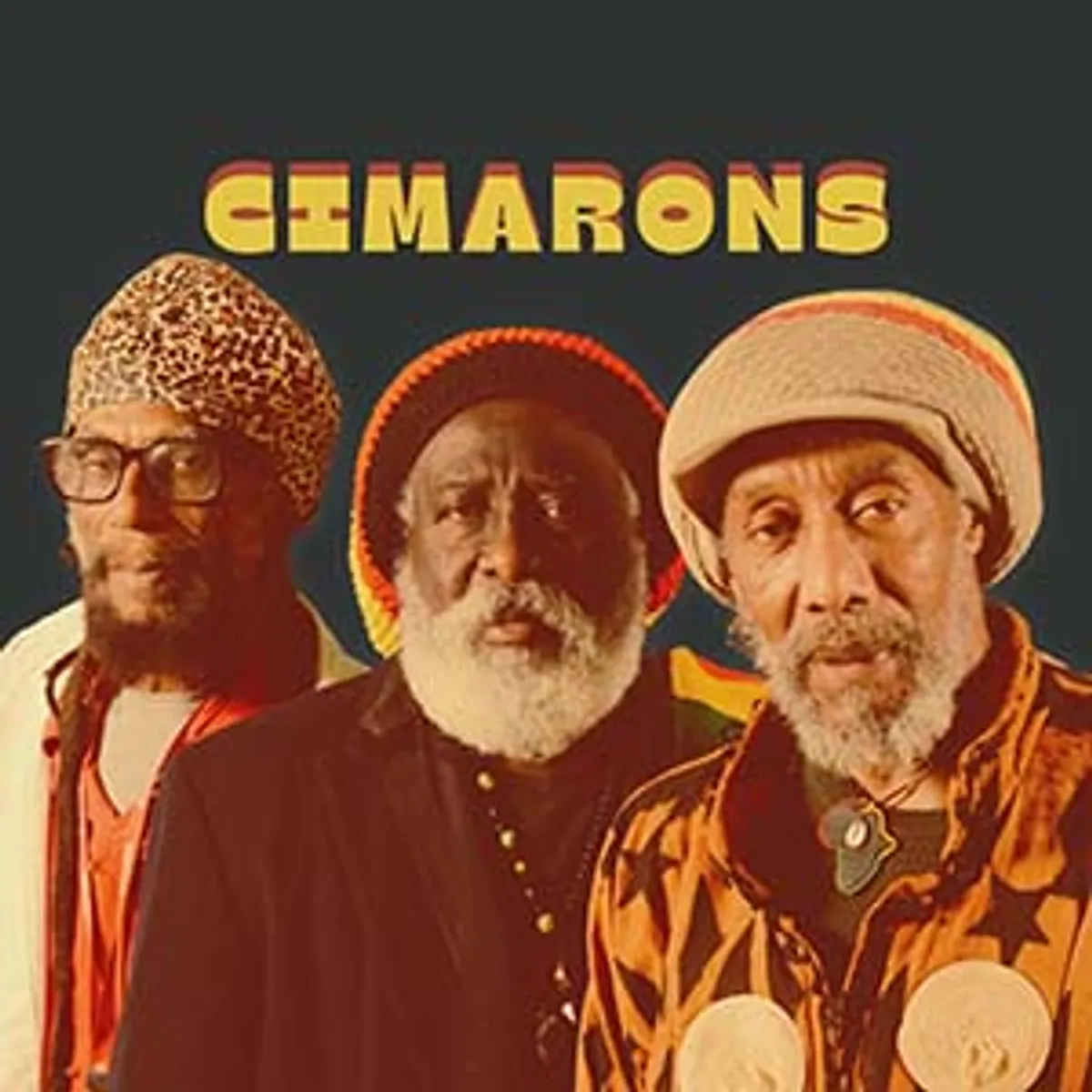
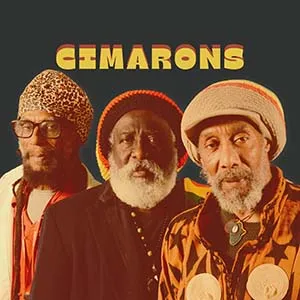
Cimarons (Locksley Gichie): "After a while we started being labeled a backing band and that was never really our intention..."
By Jah Rebel
For the first time in nearly 45 (!) years, the Cimarons returned to the studio, resulting in the excellent 'Harder Than The Rock'. The perfect moment to serve you the second part of our interview with founding member and guitarist Locksley Gichie!
Last time, we left the band at the Nigerian border during the Biafra War of 1967…
Locksley Gichie (guitar): “We finally made it to Lagos, where we met Fela Kuti and played a couple of gigs at the Afrika Shrine, which was then still called the Afro-Spot. The club was located at the Empire Hotel and attracted a lot of wealthy Nigerians.
Now at that time western instruments were still pretty scarce in Africa, so when we were getting ready to return the UK, we were approached by a number of government types who offered us quite a decent sum of money for our instruments. We were all playing cheap second hand instruments, but somehow they were prepared to pay us a large sum of money for them.
The only thing was they didn’t pay us in cash, but gave us a check, which in those days could take weeks and weeks to clear. In the end weeks became months, and by that time Frank, Maurice and myself had all taken a job at a Coca-Cola factory to make ends meet. Then one Friday, Frank didn’t show up for work. He finally showed up around midday, shouting: “Guys, the money come, the money come!”. We just took our overalls off and walked off, never to look back, to the astonishment of the manager! (laughs)
We immediately went on a shopping spree for some new instruments. Maurice bought himself some drums, Levi a nice organ, Frank wanted a Gibson guitar, and I wanted a Fender Telecaster!
We started rehearsing again, when one night Carlisle Palmer from Pama Records (later renamed Jet Star, red.) came to find us. He wanted us to back Pat Kelly for a UK tour.
At the time Pat had a big hit in the UK with ‘How Long’ (Pama Records, 1969, red.) ad he had other big tunes like ‘My Girl’ and ‘Queen Majesty’. He really was one of our idols, so we said yes immediately.
After that, things took off and other artist followed. We backed Stranger Cole, Slim Smith, Pioneers…”
And what about your own music, was it put on the back burner?
Locksley Gichie (guitar): “We hadn’t started recording yet at that time. The first time we saw a recording studio was with Laurel Aitken. We recorded ‘Mr. Popcorn’, which became a massive hit.
After that we started working with this brother from Jamaica called Phil Chen. He was Chinese and a very good bass player and guitarist. He told us: “Listen, I’ve got a studio, but I’ve got no money. But if you record an LP for me, then you can use the studio to record one for yourself as well!”. Of course, that was an offer we couldn’t refuse!
We continued backing artists like Toots and the Maytals and Jimmy Cliff, and we made our first TV appearance with Ken Booth, when he had a big hit with ‘Everything I Own’ and had to do Top Of The Pops. Same with Sheila Hylton, when ‘The Bed’s Too Big Without You’ was in the charts. We did quite a lot of television.
After a while though we started being labeled a backing band and that was never really our intention, so we decided to take the record we’d recorded with Phil Chen and take it to Trojan Records, who had then just started out.
We met with Webster Shroeder (sometimes spelled Shrowder, red.), and he told us he would check it out.
After about a week after he got in touch again and told us the album wasn’t really up to their standards, but he would like to hire us as the official in house band for Trojan. We agreed and once again we were backing a host of Jamaican artists and local UK talent.
One evening Delroy Washington walked in with this short little guy with a big afro, who he introduced as Bob Marley. He said: “Bloodclaat, the man sound good! Do you know any of my songs?”. We started playing ‘Duppy Conqueror’ and Bob was really surprised we could play his music. These were still the early days, when he was touring with Johnny Nash. We still played ‘Satisfy My Soul’ and before we knew it, Bob had invited us to go on the road with him. We played the Apollo Club in Harlesden, there was a gig in Peckham, and, of course, there was the iconic Bamboo Club in Bristol! We became good friends and even worked on an early version of ‘Concrete Jungle’ together. When The Wailers had finished the ‘Burnin” album, Bob even wanted to take us with him on tour of the US, but we declined, as by that time we’d started to focus on our own music. Cimarons actually still did a cover version of ‘Talking Blues’, which surprisingly enough made it to number one in Jamaica! Winston recorded the vocal in just one take.
Thanks to Anthony ‘Chips’ Richards, who was a great marketing guy working for Trojan, we even got to tour Japan with The Pioneers in 1975, just after we’d released our debut album ‘In Time’ (Trojan Records, 1974, red.). In Japan we even record an album (‘Gemini Part 1’, Philips, 1975, red.) with Toshikatsu Uchiumi, who was a guitarist and vocalist with Japanese rock band Carol.
We were still in Japan when we received the news ‘Talking Blues’ had gone to number one in Jamaica, so when we returned to London, we literally had just a few days to recover before flying on to Jamaica. ‘Talking Blues’ remained the number one for the next eight weeks. We played a number of gigs and got the opportunity to record ‘On The Rock’ at Channel One and Lee Perry’s Black Ark.”
You just mentioned him there, so tell us, when did Winston Reedy come into the picture?
Locksley Gichie (guitar): “Winston came in after Carl Lewis. It was Phil Chen who introduced us to Carl. He was a great singer and we ended up recording songs like ‘Struggling Man’ and ‘Oh Mammy Blue’, but eventually we had a falling out because he had the bad habit not to turn up sometimes. One day we were playing a festival where Dennis Alcapone was also performing. He just had a hit with his deejay-version of Eric Donaldson’s ‘Oh Cherry Oh Baby’. He was performing the tune on stage when suddenly we heard this sweet voice going: “Oh Cherry, oh Cherry oh baby, don’t you know I’m in love with you…”. That was Winston. We approached him right there and then, and the rest is history!”
To be continued…
About the Author
Jah RebelLag samen met Jah Shakespear aan de basis van Reggae.be; eerst als recensent en interviewer, en vanaf eind 2014 ook als hoofdredacteur.
Genres
Published
June 20, 2025