

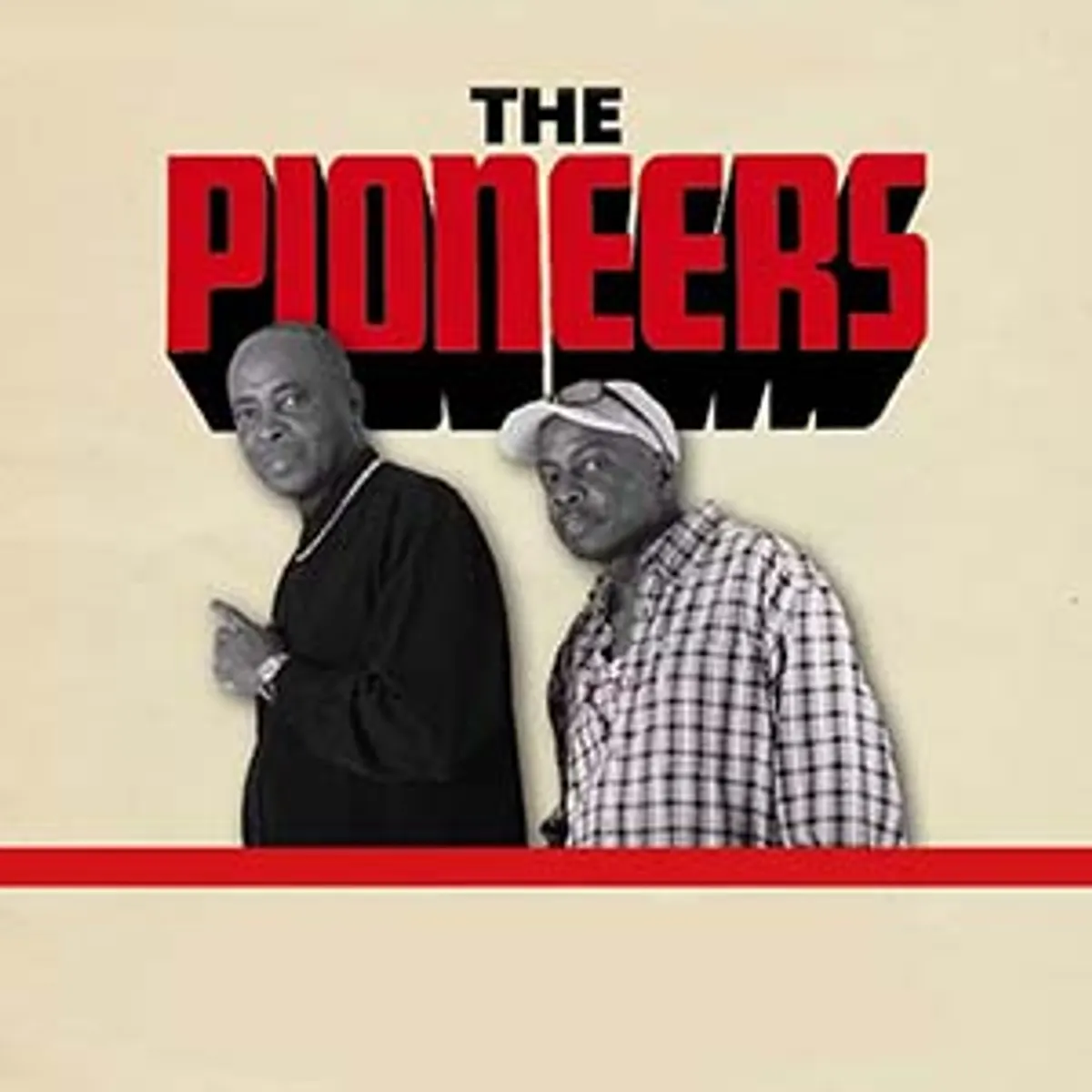
Over zowat een week doen The Pioneers nog eens ons landje aan, want in het kader van BaBa Boom staan ze op het podium van de Brusselse Vaartkapoen. Oprichter Sidney Crooks mag dan ondertussen van een welverdiend pensioen genieten in Brazilië, mede-Pioneers Jackie Robinson en George 'Dekker' Agard houden ook na meer dan vijf (!) decennia het vaandel hoog. We willen jullie dus zeker en vast warm maken voor wat ongetwijfeld weer een onvergetelijke avond zal worden en diepten onderstaand gesprek met beide heren op uit onze archieven!
By Jah Rebel
Jackie, you’ve been a Pioneer just a bit longer than George. Could you tell us how exactly you got involved?
Jackie Robinson: “I was trying my luck at the studios at the time. One day I went to West Indies Records Limited, what is Dynamic Sounds today, to audition for Joe Gibbs, for Amalgamated Records. He’d said he liked my voice and had a song he wanted me to voice. I think it was ‘Let The Little Girl Dance’ or ‘Holding Out’. But while I was there doing my thing, Sidney Crooks (founding member of The Pioneers, together with his brother Derrick and Winston Hewitt, red.) was recording a song as well (‘Give Me Little Loving’, Amalgamated Records, 1968, red.). The Pioneers had been together since the early 60s but never really had any success, and I guess around that time some early members had left. Sidney asked me if I’d be willing to voice the song with him. In those days, I really needed a break, so I would have sung with Lucifer if he asked me! (laughs) We recorded the song and it went straight into the charts. So from there, we didn’t look back and hits like ‘Long Shot’, ‘Jackpot’, ‘Tickle Me For Days’ and ‘Catch The Beat’ followed. It was all going great, until Sidney got into difficulties with Joe Gibbs…”
In that same period you guys also released a tune called ‘Pan Ya Machete’ (Amalgamated Records, 1968, red.), aimed at Lee ‘Scratch’ Perry. What had happened there?
Jackie Robinson: “Scratch had recorded ‘People Funny Boy’, which was nothing more than a version of ‘Jackpot’ by The Pioneers, so we decided to give him a piece of our mind with ‘Pan Ya Machete’! (Perry had released ‘People Funny Boy’ on his Upset label, showcasing a blood drenched machete as a logo. ‘Pan Ya Machete’ refers to the double edged Spanish machete, cutting both ways, and in Jamaican patois, a term used to refer to hypocrites: “Ah ah pan ya machete, hail Mr Upsetter. Little sins can lead to big big things. Me nah come with water, this time, me come with fire! Pan ya machete, that’s what you are… Two edge sword, that’s what you are Scratch… ”, red.)”
George, when did you first hear of The Pioneers? If I’m correct you were already operating under the name Johnny Melody in those days?
George ‘Dekker’ Agard: “I first heard of The Pioneers around the time they recorded ‘Long Shot’. At that time, I was at Beverly’s working with Desmond (Dekker, red) and Derrick Morgan. When they first came to find me, I didn’t know that they’d had differences with Joe Gibbs. We did a song called ‘Easy Come Easy Go’ (Beverly’s Records, 1968, red.) and paid for the session ourselves. But after that we couldn’t press the record because we didn’t have any money anymore! In the end Leslie Kong offered us a contract anyway, and everything took off from there!”
George, not too many people will know this, but you are actually a skilled tailor. Did you ever use that skill to make stage suits for The Pioneers?
George ‘Dekker’ Agard: “No, never! We used to have a friend who was a good tailor, a very good tailor. He used to work for a big chain store and he used to make our clothes. (laughs)“
With the classic ‘Long Shot Kick The Bucket’ you guys recorded a follow up song to ‘Long Shot’, but what not everyone will realise is that both of these songs were about a horse.
Jackie Robinson: “Yeah, it used to race at the Caymanas Park race track. The song talks about a race in 1969, when it suddenly dropped dead just before reaching the finish line (and in Jamaica his name lives on in the Long Shot Trophy, awarded annually at Kingston’s Caymanas Park race track, red.)!
It didn’t stop there, because you guys also did tunes like ‘Poor Rameses’ and ‘No Dope Me Pony’, all centred around racehorses and horse racing. Were you guys into the horse racing or betting, because I know that’s quite popular in Jamaica?
Jackie Robinson: “No, it was just one of those things that just happened for no specific reason. I never used to bet on the horses, but my father did, and he made me aware of what had happened, asking me: “Didn’t you see what happened to your horse? The horse died in a race, you know!”. That’s where the idea to do a follow up song came from.”
George ‘Dekker’ Agard: “The first ‘Long Shot’ had been a success, so it seemed a good idea to do a follow-up now that the horse had died. Long Shot was a famous horse in Jamaica at that time, so everybody would immediately know what we were singing about!”
The other difference is, off course, that when you recorded the first tune, you were still working with Joe Gibbs, and by the time you recorded ‘Long Shot Kick The Bucket’, you’d shifted to Leslie Kong. What would you say was the big difference between working for those two producers?
Jackie Robinson: “(laughs) The difference was money. Leslie used to pay better!”
George ‘Dekker’ Agard: “Yeah, he used to pay our rent and give us our weekly wages.”
Something a lot of people also won’t realise is that you guys released a version of Jimmy Cliff’s ‘Let Your Yeah Be Yeah’ way before he recorded it himself!
Jackie Robinson: “By the beginning of the 1970s we’d relocated to the UK and had signed with Trojan Records. What happened was, Lee Guptal, who was the managing director for Trojan, played us a song he wanted us the record, a song penned by Jimmy Cliff called ‘Let Your Yeah Be Yeah’. I didn’t particularly like it, but Lee kept insisting and in the end we recorded it anyway. Apparently he was right, because back in 1971 it went straight to the top of the charts, so we still followed it up with ‘Give And Take’, another Jimmy Cliff tune.”
George, off course you’re Desmond Dekker’s half-brother. As a close relative, how do you remember him? What kind of a guy was he?
George ‘Dekker’ Agard: “Desmond could be moody, but apart from that, he was mostly a very quiet person. Desmond was just one of those guys that never had a lot of things to say! Never talked a lot. He always stayed focused, thinking about the next move he was about to make. Sometimes he would suffer from mood swings, though. I mostly remember him as a very nice person. We used to hang out together in Jamaica, going down to the beach on Sundays, or to Port Royal to eat fish or drink some conch soup and just hang out. I’m so sad that he’s gone, but that’s life, that’s the road that we all have to travel, I suppose. God rest his soul.”
At one point, you started collaborating with Eddy Grant, who steered you guys more towards a soul and disco kind of repertoire. How did you guys feel about that and how do you look back on it now?
Jackie Robinson: “It was similar to the Jimmy Cliff thing… Eddie Grant had written a song called ‘Feel The Rhythm (Of You And I)’ and wanted us to record it. After we’d recorded the song, he played it for Nigel Grainge (founder of Ensign Records, red.), who loved the song. We signed a deal with Phonogram Records for The Equals, which was Eddie’s band at the time, and The Pioneers, just based on that one song! It was a disco thing, reminiscent of the George McRae tune ‘Rock You Baby’, but the people loved it, and we ended up doing an album by the same name for Phonogram Records (‘Feel The Rhythm’, 1976, red.).”
Jackie, over the years you’ve also had a stab at a movie career. What did you find in doing that that you didn’t necessarily find in doing music?
Jackie Robinson: “It was different in that it was it was visual. It was just a bit of fun and you got to meet all these big stars. I worked on movies like ‘Superman III’ (Richard Lester, 1983, red.), ‘Out Of Africa’ (Sidney Pollack, 1985, red.), ‘Superman IV: The Quest for Peace’ (Sidney J. Furie, 1987, red.) and ‘Batman’ (Tim Burton, 1989, red.), and I did commercials and stuff like that. I did that for about ten to fifteen years and mainly worked as an extra, background work, you know.”
Quite a few of your songs were covered by 2 Tone bands like The Specials (‘Long Shot Kick De Bucket’), The Beat (‘Jackpot’) or The Selector (‘Everyday’, a cover of ‘Time Hard’). How do you guys look at their versions?
Jackie Robinson: “It’s not like ours, but I don’t mean that in a negative light; it’s different. We’ve never had any problem with them covering our songs, and, in truth, it gave these tunes new life. And, of course, there was the extra money we got paid in publishing rights! (laughs)“
The Pioneers have been going strong for over five decades now. What keeps you going? What’s the secret?
George ‘Dekker’ Agard: “Well, even a retired racer, when he hears the bugle, he’ll still want to run again! It’s a similar thing. Hearing the music, will make you want to sing… The energy starts, the adrenaline starts to pump again, so as long as you have the health, strength and energy, you’re going to want to sing!”
Jackie Robinson: “I like to travel, see different places, and I love to be on a stage and perform, so as long as the people still want to see us, I’m down with that!”
Founder alongside Jah Shakespear who transitioned to this role in late 2014. Previously worked as critic and reporter, balancing passions for music and Haile Selassie spirituality.
September 26, 2024