

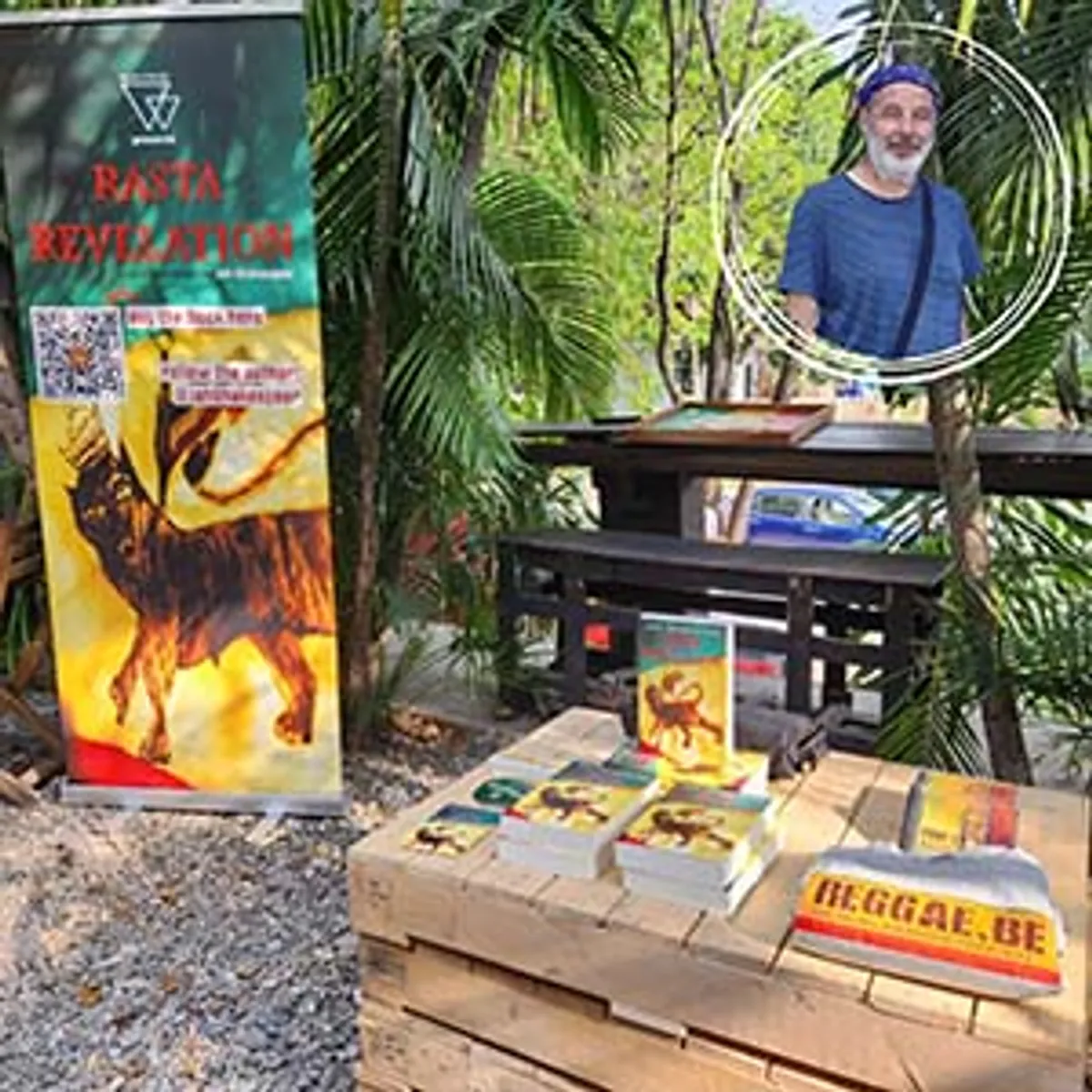
Until last year, the Edna Manley College of The Visual and Performing Arts in Kingston was led by a Belgian, who still teaches there to this day.
On Tuesday, we have an appointment at the National Library of Jamaica, downtown Kingston. I feel honoured that my book is being included in the collection here. The director, a petite, feisty woman, proves to be quite a character, both for us and her staff. Back home, we might call her outspoken or perhaps even blunt. In Jamaica, she serves as a behavioural model for most women, where despite domestic violence, emancipation seems to have progressed further than here.
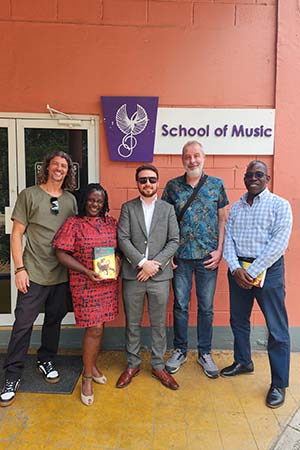
We also visit the Edna Manley College of The Visual and Performing Arts, a sprawling campus with various departments: School of Music, School of Dance, School of Visual Arts… We’re given a tour by Gerd Beyens, former director of the college and currently head of the Theory and Musicology department. He’s been working here for over 20 years. “I had a Jamaican girlfriend back then, and that’s when I started playing reggae. When I came on vacation, with my conservatory training, I was asked if I could teach here. At one point, I became the director, but it was certainly no walk in the park. A lot of administration and always being available to everyone: it was sometimes very exhausting.”
We stop by Cooyah, the boutique on Hope Road. A nice collection of tasteful T-shirts, indeed, alongside the jewellery of Bramma Shanti and other special accessories. We see more gems, arts & crafts that evening at the Kingston Night Market. I Nation sells books on Rastafari, Marcus Garvey, and black activism. Others sell original juices and other delicacies, artisanal woodwork, perfumes, clothing, and wellness products. Leslie Bryan, the operator of the ganja shop in the Marley museum, also has a stand here; I’ll leave it to your imagination what he offers.
This is where the more affluent Kingstonians stroll. Cocktails and snacks are served. There are modest performances, and I briefly introduce my book. This too is Jamaica, a bit like the Vogelenmarkt in Antwerp (albeit much smaller).
Our last day in Kingston is history day. First, we head downtown again, to Upper King Street. Liberty Hall was purchased in 1923 by the Kingston branch of the Universal Negro Improvement Association (UNIA), the organization of Jamaican preacher and activist Marcus Garvey. It was the first building owned entirely by black Jamaicans, and also their first major meeting place in the city. Garvey himself gave it its name, in tribute to Liberty Hall in Dublin, the headquarters of Irish trade unions and the independence movement, “the fortress of the militant working class of Ireland”. Garvey saw many similarities between the Irish and black liberation struggles.
Even the current UNIA chairman (the organization still exists), Steven Golding, is a devout Rastafarian. He invites us to an art gallery-jewellery store-restaurant near Ocean Boulevard. Barely had we introduced ourselves, when Golding inquired if we were Rastas; in other words: if we recognized the divine status of His Imperial Majesty Haile Selassie. It sparked a spirited conversation with mutual respect. Steven is also the first Jamaican ever to treat me to lunch, in a classy restaurant no less. Next month, he’s traveling to Bath, UK, for an event at Fairfield House, the imperial family’s residence during World War II, also known as Home of HIM in some circles. What would Marcus Garvey, the founder of UNIA, have thought of that?
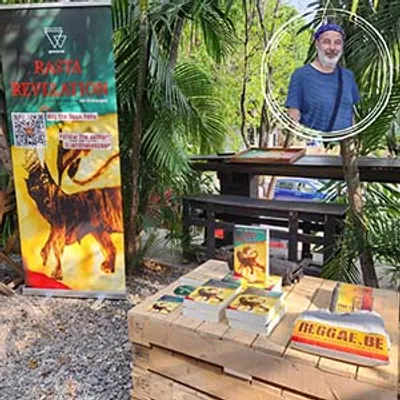
Reggae enthusiast since 1977, writing professionally since early 1980s for publications like De Morgen and De Standaard. Founded the website in 2002. Author of two books on reggae culture and history.
April 7, 2024